

Problem
Familogue, a non-profit organization, needed a way for its volunteers to log their work hours. The existing process was entirely informal: volunteers sent WhatsApp messages to staff, who then manually transcribed the hours into an Excel spreadsheet. There was no timestamp, no audit trail, and no accountability — just a staff member's best effort to keep a tally.
The stakes are high. Volunteer hours are submitted to government funders and grant bodies as evidence of community contribution. An inaccurate or unverifiable record can fail an audit and cost the organization its funding. With 5–10 active volunteers, the manual process was already a bottleneck; it would not survive growth.
Commercial tools like Harvest exist but are priced for agencies and come loaded with features irrelevant to a small NGO — timers, invoicing, project budgets. What Familogue needed was something simpler, cheaper to run, and easy enough that non-technical volunteers would actually use it.
Key Decisions
Passwordless auth via OTP magic link. Volunteers are not software users by trade. A password-based system would immediately introduce forgotten passwords, reset flows, and weak credentials. Supabase's built-in OTP email login eliminated all of that — users receive a one-time code, enter it, and are in. Signup is invite-only: supervisors create the account; the volunteer just claims it on first login via a magic link. No self-registration, no OAuth complexity.
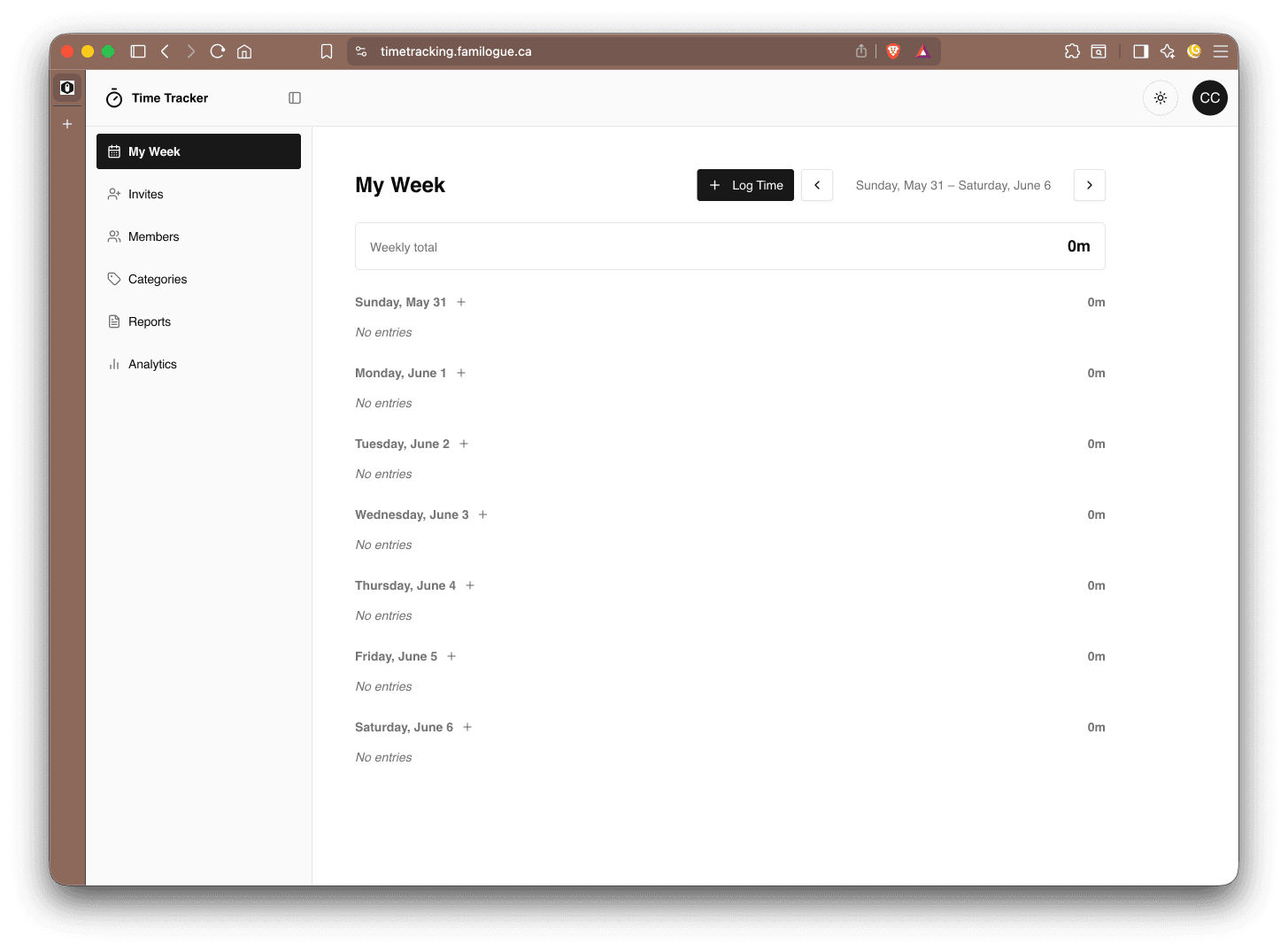
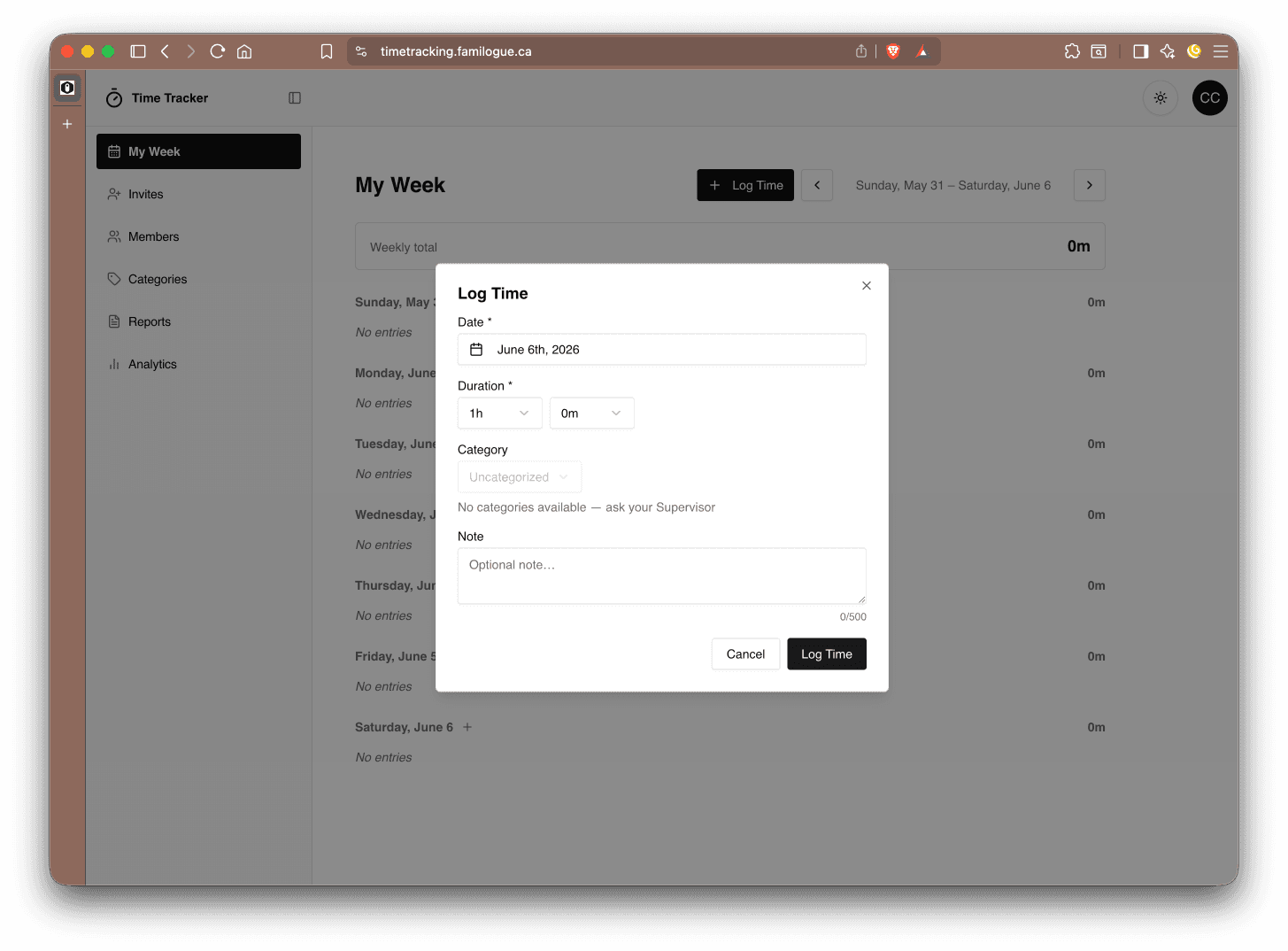
Duration-only time entries, not start/stop timestamps. The obvious approach for a time tracker is clock-in/clock-out. It was rejected deliberately. Volunteers often forget to clock out, creating phantom sessions and requiring staff intervention to fix. Instead, each entry is simply a date and a duration in hours and minutes — close to how they already reported time verbally, but now structured and persisted. The "My Week" view gives each volunteer a weekly grid to fill in at whatever cadence suits them.
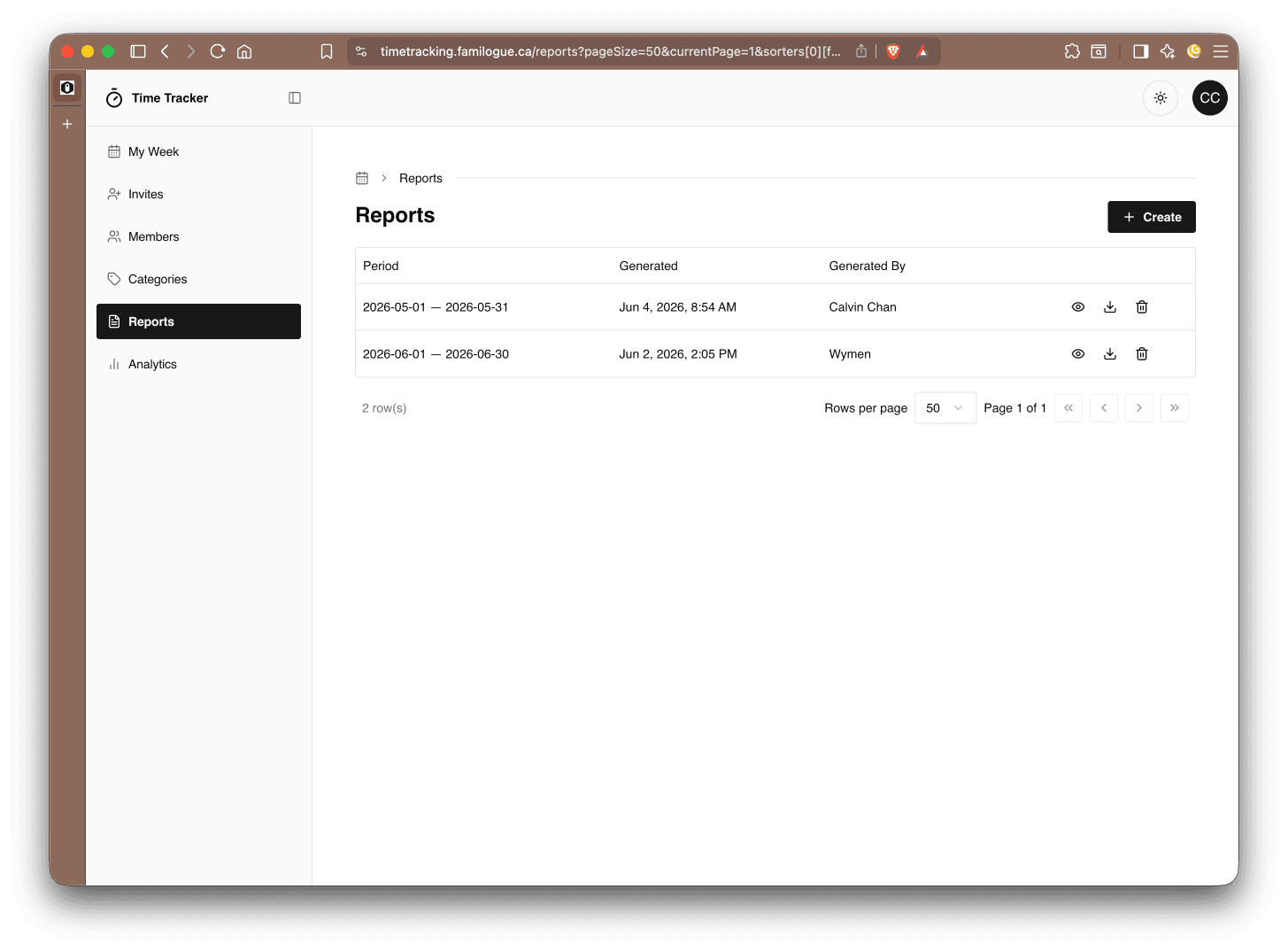
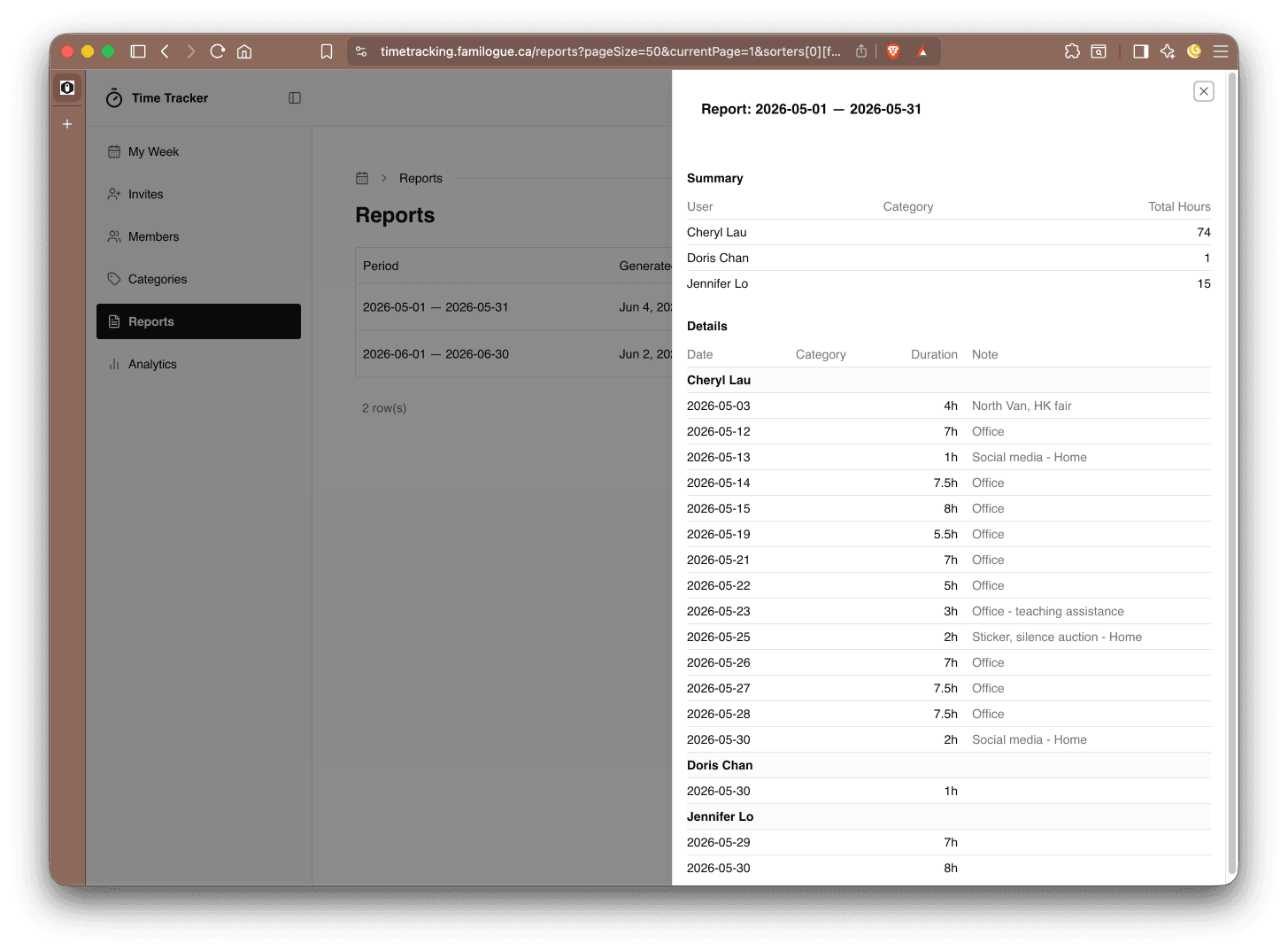
Auto-locking entries on report generation, with append-only audit log. Once a supervisor generates a report for a date range, the included entries are locked — volunteers can no longer edit or delete them. This protects the integrity of submitted data. Supervisors can still amend a locked entry when a genuine correction is needed, but every change — create, edit, delete, lock, amend — is recorded in an append-only audit log stored in the database. The log cannot be modified by any user role, giving funders a verifiable chain of custody.
What I Built
The system has two roles: Member (volunteer) and Supervisor. Members see only their own data; supervisors see everything.
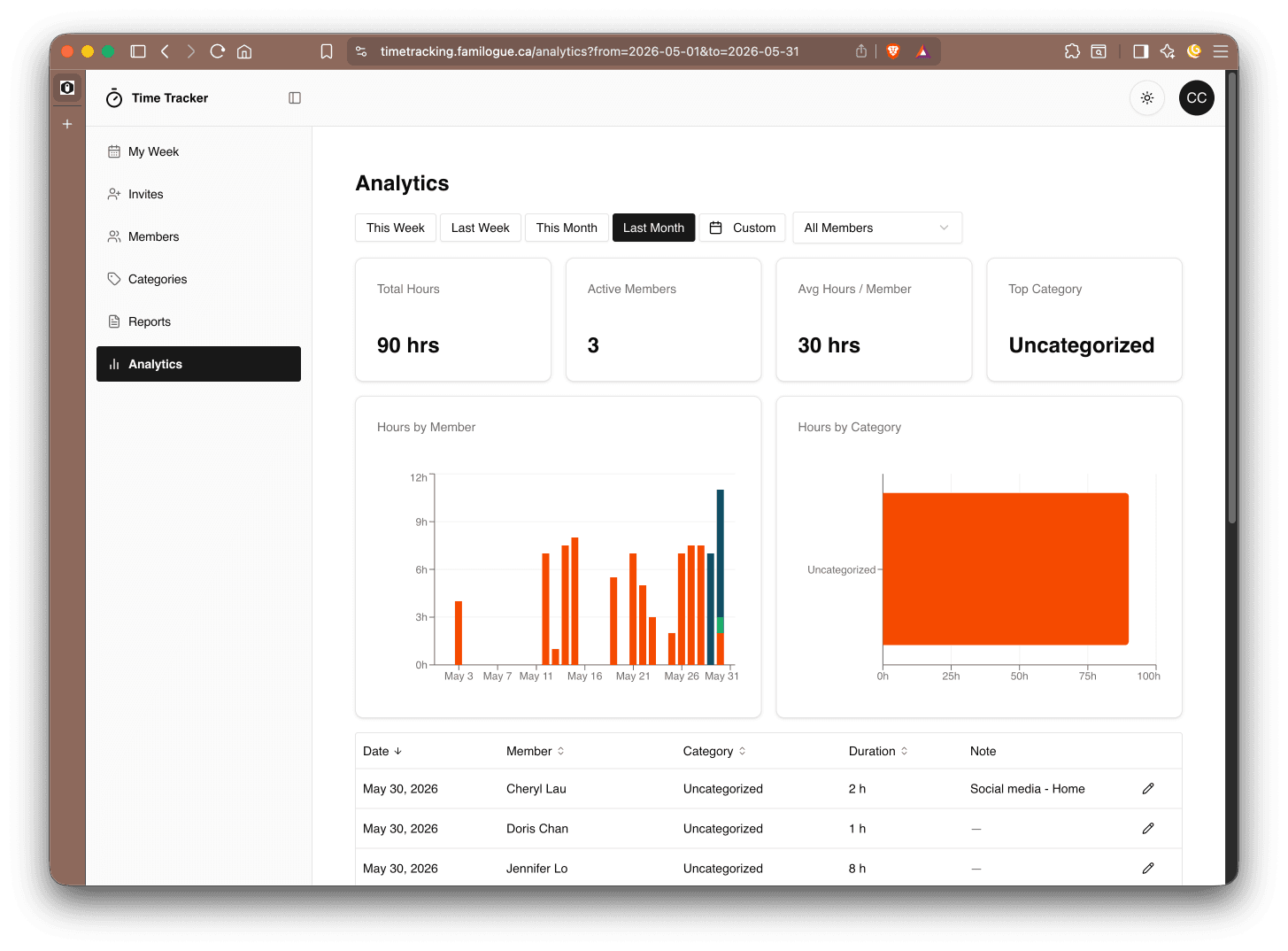
Core features: invite-only onboarding, a weekly time entry view with daily and weekly totals, a supervisor report generator that exports CSV and locks the included entries, an analytics dashboard with KPI cards and charts filterable by date range and member, and a full audit log with amendment capability for locked entries. Categories are supervisor-managed and can be archived without affecting historical entries.
The stack is Refine v5 for the frontend framework (handling data fetching, routing, and access control), Supabase for auth, database, and row-level security, and shadcn/ui for the component layer. A custom JWT hook injects the user's role into every access token, which drives all RLS policies server-side — no trust placed in the client. Development followed a PRD-first process: each feature started as a written spec before a line of code was written. Total build time: one week.
Evidence of Polish
The app is deployed on Vercel and actively used by Familogue. The RLS policy design means that even a compromised client cannot read or modify another user's data — all access control is enforced at the database layer. Report CSVs are generated from an immutable JSONB snapshot stored at generation time, so re-downloading a past report always produces the same output regardless of subsequent edits. The audit log stores before/after state on every change and has no DELETE permission for any role.
Outcome
Familogue's volunteers are actively using the app. Staff no longer receive WhatsApp messages or maintain spreadsheets. Reports are generated in seconds and exported as CSV for submission to funders. The audit trail provides the traceability that grant bodies require.
This project demonstrates the ability to scope and deliver a production-grade, compliance-aware internal tool quickly — with real security constraints, a deliberate UX, and zero unnecessary features. The right tool for the right problem, built and shipped in a week.
Work with me
Interested in a similar build? Contact me — I offer a free 30-minute consultation.